
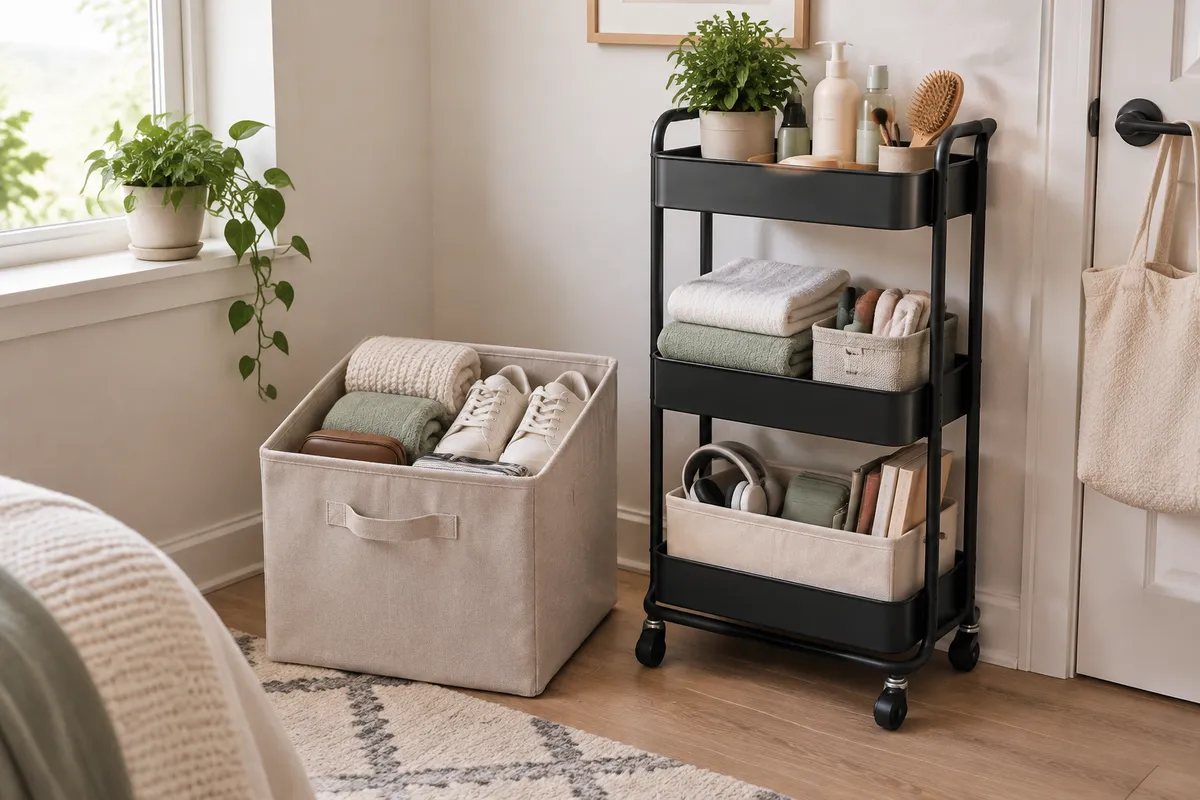
BuzzFeed Shopping recently rounded up 28 Walmart organizers meant to help you conquer junk piles and make everyday spaces work better. The roundup's item list isn't something I can reproduce here, so I won't pretend to tell you which products made it. What I can give you is something more useful: a spending plan for using any organizer roundup, Walmart's or otherwise, without turning a decluttering project into a pile of new clutter.
By the end, you'll know how to decide what to buy, what to skip, and how to keep the whole reset cheap.
Why Organizer Shopping Backfires
Here's the trap. A roundup full of bins, caddies, and shelves makes every pile look like a product problem. It usually isn't. Often the pile exists because you own more than the space can hold, or because things have no assigned home.
Buy containers first and you risk paying to store stuff you didn't need to keep. Sort first and you often discover you need fewer organizers than you thought, sometimes none.
That's the budgeting logic behind everything below: the cheapest organizer is the one you never buy.
Step 1: Pick One Pile, Not the Whole House
Decluttering without overwhelm means a small target. Choose a single trouble spot: one junk drawer, one closet shelf, one corner of the entryway. Small wins keep you going, and a small area keeps your shopping list short.
Set a time limit, say 30 minutes, and a spending cap before you open any shopping tab. Something like $15 for one drawer or $30 for a closet is a reasonable starting point. These are my suggested numbers, not figures from BuzzFeed. Adjust them to your own budget.
Step 2: Empty, Sort, and Toss Before You Shop
Pull everything out of the area. Then sort into four groups:
- Keep here: used regularly and belongs in this spot
- Keep elsewhere: useful, but lives in a different room
- Donate or sell: works fine, but you don't use it
- Trash or recycle: broken, expired, or dried out
You'll be surprised how much lands in the last two piles. Selling a few items locally can even offset the cost of whatever organizers you do buy.
Step 3: Measure, Then Write a Short Shopping List
This is where most people overspend. Measure the drawer, shelf, or closet space before browsing. Write down width, depth, and height, and keep the numbers in your phone.
Then list only what the "keep here" pile actually requires. A few examples of how to translate a pile into a need:
- Loose small items (batteries, tape, pens) need dividers or small trays
- Items stacked and toppling need a shelf riser or bins
- Things you can't see need clear containers or labels
- Floor clutter near the door needs hooks or a basket, not a furniture piece
If an organizer in a roundup doesn't match a line on your list, it doesn't go in the cart, however clever it looks. That one rule handles the "things you didn't know you needed" temptation.
Step 4: Shop Smart at a Budget Retailer
BuzzFeed's roundup focuses on Walmart, whose budget-friendly positioning makes it a natural place to start for low-cost storage. A few habits help any retailer visit stay cheap:
- Compare unit value. A multipack of bins often costs less per bin than buying singles, but only if you'll use them all.
- Check current prices at checkout time. Roundup prices can change, so confirm before you commit.
- Consider store pickup. It lets you skip aisle-wandering impulse buys.
- Check the return policy. If a bin doesn't fit your measured space, you want an easy way back.
Step 5: Use What You Already Have First
Before buying anything, look around your home. Shoe boxes make fine drawer dividers. Jars hold small hardware. A spare basket from another room might fit the shelf perfectly. You can always upgrade later once you know what works.
This is also the cheapest way to test a layout. If a shoebox divider system survives a month, buying a nicer version is a confident purchase rather than a guess.
Step 6: Make the Result Stick
An organized space that falls apart in two weeks was money wasted. Three habits protect your investment:
- Label the home. If everyone knows where things go, they get put back.
- Leave a little empty space. A container packed to the brim invites the next pile.
- Do a two-minute reset weekly. Return strays, toss trash, done.
Small Spaces Need Fewer Products, Not More
In a small home, the temptation is to buy storage for everything. Resist it. Vertical space like door backs, wall hooks, and shelf risers can add capacity cheaply, but every item you store still has to earn its square footage. Ask of each object: would I buy this again today? If not, it's a donation, not a storage problem.
The Takeaway
Before you click on any list of 28 organizers, empty one drawer, measure it, and write a three-item shopping list with a dollar cap. Then buy only what's on that list. That single habit keeps your home tidier and your wallet fuller than any roundup can.